Updates

1-4-2020 Hi! I've graduated college now and am working full-time. I stopped updating this blog page more than 5 years ago now, but I hope it's helpful to some people at least~

UPDATE// Added links for Troy Guides (SUPER AWESOME! CHECK IT OUT) and AP Cram Packets to Studying Tools > Helpful Links page
Showing posts with label tips. Show all posts

Saturday, September 28, 2013

Education Apps!

This is oriented towards people who have smartphones.


A flashcard app is a must for students who either don't have time to hand write flashcards or , like me, are just too lazy to, and I highly recommend Quizlet. I tried numerous other apps like Flashcards+, but I discovered that Quizlet was the most easy to use and had the most functions. My favorite thing about Quizlet is that if you connect it with Facebook, you can leech off of your friends and their flashcards. :) For example, for the nomenclature quizzes, many of my friends made flashcards of the anion/ion list and I just used theirs instead of making my own. It's simply just more efficient!

Features of Quizlet (that I use):
  1. Ability to make flashcards/ "copy" someone else's flashcards and edit them, combine multiple  sets of flashcards
  2. Create classes/ join classes where you can share a set or limit the visibility of a set to a certain class
  3. Learn/Test modes
    • I tend to shy away from "learn" mode because I think it's too tedious to enter in the accents for foreign languages
    • If you know that a test will be multiple choice/ matching/ etc., then it's really easy to imitate the test using the test mode in Quizlet!
How I usually go about using Quizlet:
  1. Make flashcards on the computer or save someone else's set.
    • If I use someone else's set, I check to make sure that the information is accurate
    • I don't like making flashcards on my phone because I type much faster on a computer.
  2. Review the flashcards on my phone whenever I want to! 
    • This also allows me to bring fewer books to school, and the lighter my backpack is, the better.
Some Pre-made Flashcards/Classes (just in case you wanted them and by no means an extensive list):
  • Spanish 2H- ivana_sison  has all of them
  • Spanish 3H- dynnjavier has flashcards for 2nd semester
  • APUSH & Compsci IB-SL- kuofish (he has some French 2 and French 3 cards also)
  • Troy High School- It has a bunch of flashcards for a whole range of classes, but I prefer joining individual classes so I don't have to search through all the sets in order to use one. 
  • What I suggest: Create a class to save all the sets you need for that certain class for easy access! (You can save sets that other people have created and add them to any class)
  • For more sets/ classes (English, Design Tech, Chemistry) you only need to do a quick search!


I use Evernote primarily for saving word documents/ vocabulary lists/ textbook PDFs to use on-the-go or just to access without the need to print anything. For me, Evernote is an extension of the internet -- the offline version of viewing a document. This way I can do my math homework without waiting for the book to load all the time in Safari. I haven't completely learned how to use Evernote so I don't understand all the features, but I'll update this post whenever I discover something great.

I'll expand on this as I learn of new apps. If you want a tutorial how to use Quizlet/ Evernote, just let me know and I'll post either screenshots or a video link up!

Have any suggestions/ want to add something?  Contact me!

Saturday, September 14, 2013

Tips for School, or Life really


Hi guys! So my friend Van Nguyen wrote these great tips in a collaboration with her friend Janice Lee. All credit goes to her. I think it's a great little post that let's us think about our life in the long run. Read the whole thing because it gives us tips for the bigger picture rather than just specifically for certain classes.
  1. Start out on the right foot. It’s kind of like starting out your day with a nice breakfast and a good night’s sleep - you just feel good and you stay energized throughout the day. You’re less likely to dread the day if you start off strong. Similarly, if you start off the year strong, you’re bound to do well. Starting out strong gives you a good foundation that you can continue to build upon as the year goes on.
  2. Stay organized. Make use of that crappy planner your school gives you. Keep a checklist in the planner of what you need to do that day so you don’t forget to do anything. (What I do is I keep a pad of sticky notes that serve as an everyday to-do list. I write down what I need to do for the day, and as I go through tasks, I highlight or cross them off. I start a new sticky note every day and I keep dates on them.) Keep a strict schedule of when to do homework and when you can relax. This will help you stay on task so you won’t be able to procrastinate! (I have such a terrible habit of procrastinating). Have a friend come up with small punishments that you have to do if you go off schedule. Pick a day each week to organize your binders and papers. Keep tabs in your binder so you can organize your papers by period. Being organized will save you so much time. This way you won’t be scrambling to find that homework you did last night or the paper you were supposed to get signed.
  3. Don’t let the bad days define your year. One day is actually ridiculously long and you’ll be surprised how many good things can actually happen in 24 hours. Be thankful for what you have and even if school treats you horribly, just know that you’ll feel relief once you step through your front door. With 24 hours in a day, bad things are bound to happen to you. Just don’t dwell on them. If you had a bad day, take a step back and look at the big picture. Just because you had a bad day doesn't mean it’s gonna be a bad year! Don’t feel bad if you’re unproductive and tired. There will be some days where you can’t do anything but mindlessly go through your whole day. It’s okay. We all have our off days. Tomorrow’s a new day, so take advantage of the second chance.
  4. Try hard when you can. You’re not going to be in school forever and realize that even if the work seems completely pointless and just there to torture you, all of it is going somewhere. Imagine getting that A in a class or getting a score you’ll be proud of on a test. It pays off in the end and when college app season comes around, you’ll be thankful you worked hard. Habits stay so it’ll benefit you in a number of ways. Just remember that even though slacking off seems harmless for the day or even for the year, you’re gonna end up paying for it when college comes around. If you try your hardest, you’ll know that you truly deserve the grade you get. 
  5. Don’t be too hard on yourself. Take a break when you need it and just try your best. If your best is a 89% in your class, you should be proud because you tried your best and actually earned your score. Just remember that your grades don’t define you as a person. A personality cannot be defined in simple letter grades or percentages. 
  6. Don’t forget that school can be fun too. There are a lot of clubs on campus. There are bunches of sports to join. There are new friends to make. Join clubs that you’re passionate about. Join a sport if you like it. Even if you think you can’t make the team, try out anyway! At least if you try out, you won’t spend the rest of the year wondering if you would've made it or not. Don’t forget that your teachers are people too. They have their own lives and I’m sure there’s something awesome about them if you look hard enough. Do things that’ll make you look forward to school.
  7. Learn to love what you’re learning. People interpret the universe in so many different ways. Some people can make sense of the universe through math, history, science, art, literature, or computer science. Don’t judge someone just because they love that subject that you hate. Go to school to learn not for the grades. Your grades don’t mean anything if you didn’t actually learn something from the class. Most people go to school, ace a test, then they forget everything they learned. Don’t do that. The way I see it, the point of school isn’t to get a good grade. It’s just to try and make sense of your life. All the knowledge you learn from school can be applied in real life. Of course, I can’t expect you to retain all the knowledge you’ve learned. You’ll find interesting things in every subject. If you learn to love knowledge, you’ll learn to love school. Don’t call someone a nerd just because they’re enjoying school and getting good grades. It’s great that they’re doing that! (Of course, this is coming from a fellow nerd).
  8. Live in the moment. You’re not always guaranteed a tomorrow. I have this philosophy/theory/way of thinking of how no one should think about any more than 100 future days. In 100 days, you will be an entirely different person because things are constantly changing. You won’t have the same worries as before. You will have different priorities and you will have met more people. No one should worry about the future that much. You’ll get so much anxiety if you spend all day worrying about the future. The best plan is always just to wait it out and see. Take things as they come. That doesn’t mean you shouldn’t plan. Planning for the future is great! Just don’t obsess about the future. 
  9. In the beginning of the year, come up with a list of things to accomplish by the end of the year. This way you’ll have a list of things to look forward to. You’ll feel so proud when you’ve accomplished them. It gives you a reason to live because you’ll be thinking of that moment when you’re finally there where you want to be; it’s just like a reason to live when things get really bad, you know? It will give you a sense of direction. (I did this for summer and even though I crossed like 5 things off, I felt so good knowing that I actually did something with my summer. I know that I didn’t waste it, which made this summer worthwhile.)
Bottom line is there are a countless amount of things you could do to make your year better. You’ll find them as you go along. You’ll learn year after year what works for you and what doesn’t. Learn from each year. Make each year better than the last. 

Last of all, JUST RELAX (but not to the point where you slack off). You’re gonna be fine. People will love you. Stay on top of things. You’re the only one you can depend on, so don’t let yourself down! Just remember that some things will be out of your control. There are some circumstances that you cannot change no matter how hard you try. So just relax and make the best of what you have. Stop worrying so much. :)


Saturday, August 31, 2013

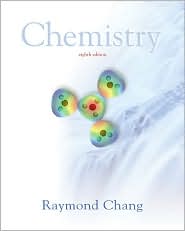
Honors Chemistry (Regli)

For information regarding what kind of teacher she is, please view http://www.ratemyteachers.com/shannon-regli/23661-t/1

My thoughts on the class: Chemistry was a challenge for me. In hindsight, I wish I would have followed Regli's tips on the syllabus but, quite frankly, I'm lazy. She recommends rewriting the notes in my own words but I just didn't really want to.

  1. Tips for Studying
    1. Don't fall behind on the homework. Chemistry is a dense subject; you learn a lot during lecture everyday and the homework reinforces all that new info. Do it every night and correctly (not just to finish), yes I know it's tedious, but practice makes perfect. 
    2. Review your notes before the test. Or even better, re-write your notes in your own words as Regli recommends. Especially for units mainly testing on theory ( like the nuclear chapter), I recommend the latter. Notes are a better guide than the textbook, so you can skip the reading in the textbook.
    3. Make sure you know the reasoning behind the problem solving. On tests, all of the questions are similar to those of on either the notes, homework, or sample test. If you know how to solve all the problems and the reasoning for why it should be solved a certain way, you have an increased chance of doing well on the tests.
    4. The main restriction on the tests is time. To overcome this obstacle the key is practice! If you ever need more questions to practice, the book has plenty! Regli also has the teacher's edition book so you can always check your answers too.
    5. Specifically for nomenclature, memorize. It's a pain to memorize everything, but you set yourself up for failure if you don't because the nomenclature re-appears in future tests. Also, it's the only test that is so straight-forward that the majority of the students do well. Take advantage of the grade buffer!
    6. Regli has to go through a lot of material in a short amount of time and sometimes you get confused. If you don't understand a problem, tackle it quickly. Chemistry is like math; the knowledge builds on each other, so you need to have a good foundation. My go-to explanation places are Crash Course and Khan Academy. Notice how I didn't include the textbook. :-)
  2. Passes
    1. About: Regli gives a sheet with 3 tardy passes and 3 homework passes in the beginning of each semester. It's worth 6 extra-credit points at the end of the semester if none are used. Your name must also be written in pen for you to use it/ redeem it.
    2. Tip: Always keep the pass on you! It was really devastating to see a few of my classmates unable to receive any points because they forgot to bring the pass when Regli was collecting them. So, keep the pass in your chemistry folder/binder rather than leave it at home where you won't lose it because you just might forget to bring it to school on the most crucial day.
  3. Other
    1. Get the Casio scientific calculator she recommends! You don't even have to buy it -  just check it out in the library and you can use it for the whole year :) The texas instruments one has harder buttons to push and I know that sounds super trivial right now, but during a test you're going to beg your classmates for a casio.
    2. She rounds up at 89.5, 79.5 etc.
Thanks to strangedolphin and Train for the help!

Saturday, January 19, 2013

AP European History

Scale of difficulty: 4

The class is heavily weighted on tests. The homework counts for 20 points and tests one hundred points and some other miscellaneous assignments. However, completing the homework is very important -  turning in partially completed homework is better than nothing. My grade actually plummeted to a C in the beginning because I didn't turn in one homework assignment, whoops.

After completing the class, some things I would recommend that allowed me to succeed in the class are:

  • listen intently during class and really digest all the information
    • this allowed me to thoroughly understand the material
  • for certain chapters, make a timeline like the French Revolution
    • for some chapters, every thing happens in a short amount of time and some questions are the test are straight-up asking the order for certain wars/ treaties
  • memorize the important things
    • yes, I know that's vague but you should already know what's important and what's not. Often, like I've said before, a lot of the questions are just facts rather than critical thinking
  • once you've memorized the facts, understand the concepts
    • like what was the cause and effect of an event and even relate it to another event in another unit! Tying it all together :)
On a brighter note, it's one of the more interesting classes at Troy! (That may just be because I enjoy history; it's so exciting!)

Resources:
  • Liem's Afterschool Review Recordings
    • Just need to download the file; no viruses, I promise!
  • Annabelle's Review Page
    • -made for Troy students!- check this one out for sure! It has some really helpful sites that I would place on here, but it would be redundant.
  • AP Euro Notes
    • compiles all the powerpoints onto a nice, pretty website.
      • *some of the links don't work because the website is a decade old*
  • Chapter Outlines
    • for the tenth edition of the book. Just adjust accordingly.
  • AP Euro Notes
  • AP Euro Notes
  • AP Practice Questions
    • 1,000+ questions, but you can only answer the questions one time (very frustrating)
    • organized by century and different topics (religion, social movements, art, politics, etc.)
  • Flashcards
    • a previous student's flashcards
  • Lectures:
    • Lectures
      • professor from Berkeley's lectures on Euro
      • really detailed, almost too detailed
    • Khan Academy Videos
      • mainly concentrated upon the French Revolution and Napoleon (I watched it before the test and got an A!)
    • Hank's History Hour
      • on iTunes so convenient to listen to on-the-go!
  • Review Sheet
    • more broad, not specifically for Troy (more tailored for the AP exam)
  • More Review
    • if you've read everything else... might as well!
  • ACE Practice Tests
    • practice tests tailored for our AP Euro textbook! 
    • the questions are not very difficult

Saturday, February 11, 2012

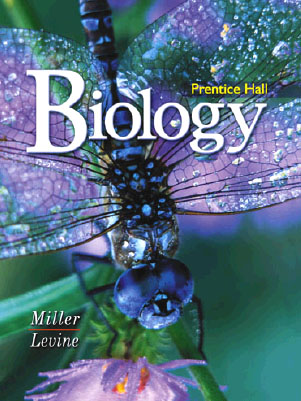
How To Survive Biology H - Chavez

It has homework, Power-Point lectures, contact information, etc.

For more information on her like how she teaches please see http://www.ratemyteachers.com/kristen-chavez/319386-t !
  1. Passes
    1. About: Chavez gives out a sheet with 6 passes on them - three for homework* and three for going outside of class. At the end of the semester the passes can be turned in for extra credit for a total of 18 extra credit points.
      1. *The homework passes are for one day late homework.
    2. TIP: Do not use the passes! Seriously, NEVER. That's a given right? Well, you may forget to do the homework one day and you'll feel an urge to use your passes. WELL DON'T. It's a bad idea. Why? Chavez stamps the homework on homework sheets. That means individual homework assignments are not graded but it's all of the homework in a chapter or two. All the homework sheets are worth 30 points. No matter if there were 145 total points, the actual amount of points you get for homework is always 30. You may think that the homework assignments are worth more but they are actually worth a lots less than the stamps. [sorry for the wordiness!]
    3. Getting those 18 EC points is equivalent to get 18 more points on an exam because the extra-credit points go in as non-weighted points.
  2. Extra Credit
    1. Always do the extra credit! Biology Honors is one of the more challenging "IB" classes. If you receive average scores on tests then the extra-credit is almost the only thing that push your grade from a B+ to an A-.
  3. Participation
    1. Participation is worth a total of 30 points at the end of the semester. 
    2. Even if you aren't the brightest person, Chavez give participation points for people to read labs or pass out/ collect papers. Those points are gimme's.
    3. If you are more of a shy person, volunteering to collect/ pass out papers is your best bet of getting full participation points.
    4. Pro-tip: Raise your hand lots in the beginning of the school year because most of the students are scared to raise their hands or don't realize the importance of participation. (This applies to all classes)
  4. What to do during class/lectures 
    1. While Chavez is stamping the homework, outline the upcoming chapters or preview what she will talk about later
    2. While she's lecturing, follow the lecture with your textbook because she may ask a question that's a small, almost seemingly random detail from the book. If you forgot your book at home (which is a big no-no) you can always borrow your neighbor's book.
    3. While she's lecturing, take notes on things she may emphasize. Chavez lectures off the lecture notes on her website [gotscience.com] and whatever she says that not on the lecture notes, write down in your own notes! Remember to make it legible too since you'll be reviewing those notes before the exam.
    4. Whenever she says, "I like this concept..." or "...very important..." or shows you a picture over and over again, that is something to burn into your memory!
    5. Watch her facial expressions! This kind of ties into the tip above. Most her students knows that she makes these faces to hint that something will be on the test. She has her own 'smirk' and nods to make it more obvious. When she makes a face or does her 'thing' she's almost always hinting at a question on the test.
  5. Studying Tips! 
    1. Do the tests / quizzes on the CD a while before the test so if you don't understand anything, Chavez can still explain the concept to you! Also, the CD test results gives you a rough estimate of how much studying you need to do, but be aware that the results aren't exactly what you get on the test (e.g. 100% on the test doesn't guarantee an A on the test, you should still study)! Study a bit of what you get wrong, and look over the answers. A few questions from the CD often come out on the test, especially in the beginning of the year!
    2. Don't write awful outlines because the outlines are where the knowledge comes from and the lectures just reinforce the knowledge. Don't understand something from the outline? Ask.
    3. Pay attention to and memorize important diagrams. A picture is worth a thousand words and some sections are basically just explaining diagrams - understand the diagram, understand the section.
    4. Also, pay attention to the small details and learn how to apply your knowledge. The application questions usually get everyone.
    5. Don't start studying the night before... it just doesn't work out. But if you must cram, you must cram efficiently. Try to predict what she'll ask on the test. 
    6. You may want do the CD questions and review key terms the night before the test to refresh your memory of confusing questions. You should get 100% this time around.
    7. Lastly, go over her "Checklist to Succeed" and see if you want to incorporate anything from there into your studying habits for Biology. For me, I thought the list was a bit extensive and these are the things I did to succeed in Biology.
Thanks to strangedolphin and others for help!

Sunday, January 29, 2012

6 Biggest Lessons From Freshman Year


  1. Don't procrastinate! You'll come to regret it... the day before whatever assignment is due. Trust me, been there, done that - several times at least. Sadly, no one will listen to me, but it's a nice reminder!
  2. Every point counts! Some people end the semester just a few points away from an A. Maybe they could have worked harder on participation or turned in one assignment. It's just really unfortunate to see people so close, yet so far away.
  3. Back on the points matter... Always raise your hand! Reel in those participation points. Those points are basically gimme's. They are so easy to get, yet if you don't participate at all they can really affect your grade. Also, if you aren't the best test taker, the participation points are a cushion for your not-as-great test scores. Pro-tip: Raise your hand lots in Biology. 
  4. Stay organized! Whether it's having a binder for each class or one huge binder with lots of little sections, keeping your papers organized is a key aspect at Troy. You may think it won't benefit you in the future, but when the time comes for studying for finals... you'll be grateful to have all your papers organized and read to study from!
  5. Always, always, always do the extra credit, no excuses!! Even if its the beginning of the year and you have a 98% in a class, you never know what your grade will become in the future. I had a 98% in math which went in a gradual decline to an A-. I regret not completing the extra credit! So always do the extra credit. Those high A's aren't stable - especially in the harder classes!
  6. If you're thinking about dropping an honor class, I would definitely question yourself. Ask yourself these questions: Do I not understand the material and asked for teacher's help but still don't understand it (this only works if you have a teacher who actually teaches)? [If you said yes here then I personally would drop. It isn't a matter of habits, just understanding the material.]  Am I trying my hardest? [I know that sounds cliche but if you trouble then there's not much you can do other than dropping the class]
~currently expanding~

Friday, January 27, 2012

Helpful Links for Studying!

Click here for official textbook list

Spanish 1 Textbook
  • If you have trouble grasping a grammar concept/ vocabulary in Spanish, classzone.com should be helpful! On the website it includes animated grammar, extra practice, quizzes for each lessons, online flashcards, etc. Check it out for yourself and see if it's helpful! Another website is studyspanish.com. Although the website isn't tailored to the book like classzone.com is, it has more detailed in the grammar explanations and has even more tests/ quizzes you can take! All you have to do is sign up for a free student membership.
Algebra 2 Honors Textbook
Algebra 2 Textbook
    • For regular Alegbra 2: http://www.classzone.com/books/algebra_2/index.cfm?state=CA. It has extra challenges and examples for each lesson, flashcards and crosswords for vocabulary terms (Flipcard activity & Crossword Puzzle), and they even have a games for people who think math is boring. It is just basically a simple game with questions in between each level. (The graphics are very simple so don't expect much)
    Khan Academy Logo

    • There are lots of online tutorials but I think the best of the best is at Khan Academy! They have lots of comprehensive videos on a large variety of subjects! I go here for Biology mainly, but they have lots of subjects, from Geometry to SAT prep! Unfortunately, they don't have foreign languages or anything related to English. See their diverse videos yourself!
    • There are also other online tutorials like http://www.courserepository.org/ (It's very extensive in Biology!) 
    • For Biology, studying off the CD practice quizzes/ tests are the best place. If you need extra help go to your teacher or check out the online tutorial sites!

    • For honors Chemistry: Student Study Guide has summaries of the sections and interactive examples where you can answer questions as you learn or review and the Online Learning Center: has self-assessments, Animations, Chapter summaries, and more.
    • Now there aren't many sites for English help since English consists mainly of essays and analyzing, some helpful sites include SparkNotes, but we all know that website already don't we? If don't already know what SparkNotes is, this nifty site will tell you all about SparkNotes and what it offers. Two other websites are Cliff Notes and Shmoop ; you may also consider checking out cliffnote's book study guides from a local library. Shmoop is really helpful for reading quizzes since they have quote and symbol quizzes; it is has lots of great things, you really just need to explore it! If you have trouble with grammar http://grammar.quickanddirtytips.com/ has lots of tips!
    • For the Non-Western History class, the test concepts are based on handouts and not solely on the book. There are map questions for each unit we learn though. One of the hardest maps for me to memorize was Africa. After using http://www.ilike2learn.com/ilike2learn/africa.html I almost aced that section the test. If you prefer doing it old-school you can always print out a blank map and just fill in the countries.
    • If you're having trouble in math, check out videos from Khan Academy (see above), Patrick's Videos (great for calculus students) or Paul's Notes. Again, each student learns differently so try each website and see which one helps you the most!
    • AP Cram Packets
    • Troy Guides (VERY HELPFUL!)
    • Anti-Procrastination Apps
    ~currently expanding~

    Studying for Finals (any class)

    1st semester has come to an end and the dreaded finals week is over! [Cheers] Now in hindsight I feel that I should have studied much harder for Spanish. It may actually be my only B (hopefully!) My geography grade was at a solid A so I didn't have to worry about that too much! Now no one wants to hear my rant on about my grades so here's some
    tips for studying for the finals: 
    1. Always study the study guides the teacher gives!
    2. If there's a cheat sheet, write all over it. Abuse that thing. Everyone says that things you write down you remember, so you won't have to glance onto your cheat sheet too often on the test.
    3. Anticipate your teacher's questions! If your algebra teacher has a special liking towards factoring, expect some factoring questions! My biology teacher loves ecology and half of the test was on ecology - funny how it works out, isn't it?
    4. Study all the handouts of for math: study notes, warm-ups, review worksheets (if your teacher gives them), maybe homework - if you can read it
    5. Don't procrastinate your studying! You may be able to cram in some concepts if you already understood the concepts in the past. Something you can't procrastinate on is vocabulary. (At least I can't) You'll have to review vocabulary everyday in order for it to stick into your mind.
    6. When studying, try to go to the library, or somewhere that has no distractions. Yes, that means off the computer!
    7. Utilize your resources by going onto websites that help you review the material, making flashcards, asking questions about confusing concepts.
    8. Get a good sleep and eat a good breakfast before the final! You don't want to be sleepy during one of those tests... 
    Hope those tips were helpful!